Where Art Meets the Wild: Serengeti’s Hidden Architectural Soul
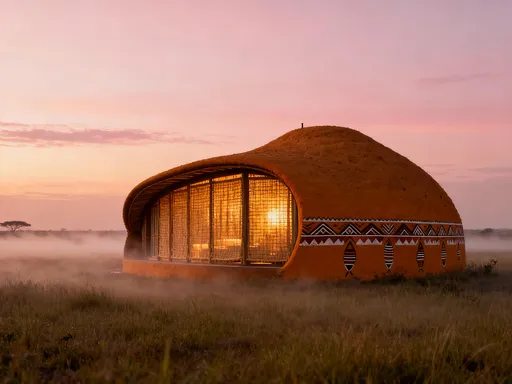
You know what I didn’t expect in the middle of the savanna? Jaw-dropping architecture that feels like art carved by nature and culture. In Tanzania’s Serengeti, beyond the migrating herds and golden grasslands, there’s a quiet revolution in design—eco-lodges shaped like termite mounds, hand-built guesthouses painted with Maasai patterns, and open-air spaces that blend into the horizon. This isn’t just travel; it’s an immersive gallery where every structure tells a story. Welcome to architecture with soul.
The Unexpected Canvas: Art and Architecture in the Serengeti Landscape
The Serengeti is often celebrated for its wildlife, but its landscape is also a silent architect. Vast open plains stretch uninterrupted under wide skies, acacia trees cluster like brushstrokes on canvas, and seasonal rivers carve gentle curves through the earth. These natural forms do not merely surround buildings—they shape them. Architects working in this region understand that harmony with the environment is not an aesthetic choice but a necessity. The most thoughtful structures rise from the land as if they have always belonged, their silhouettes echoing the swell of a distant kopje or the arc of a baobab’s branch. A lodge’s curved roof may mirror the dome of a termite mound; a stone wall might follow the same path as a zebra trail. This is design born of observation, where the first step is not sketching blueprints but listening to the wind, watching the light, and learning from the animals.
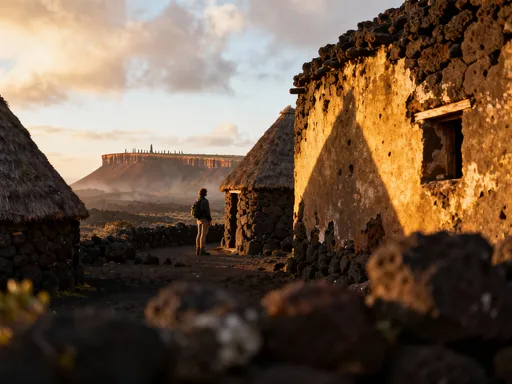
One sunrise at a remote eco-camp reveals the magic of this integration. As golden light spills across the savanna, it catches the edge of a thatched roof angled precisely to catch the morning warmth while shielding the interior from afternoon heat. The dining area, open on three sides, frames the horizon like a living painting. Guests sip tea as a herd of wildebeest moves silently in the distance, their forms blurred by mist. There is no fence, no barrier—only a low stone wall that suggests boundary without enforcing it. This deliberate softness in design invites connection, not separation. The architecture does not compete with the view; it enhances it, guiding the eye and shaping experience without dominating the space.
What makes this approach unique is its rejection of the idea that buildings must impose themselves on nature. In many parts of the world, development means clearing land and constructing in opposition to the terrain. But in the Serengeti, the most respected projects begin with minimal disruption. Foundations are placed to avoid uprooting trees, walkways follow existing animal paths, and structures are oriented to capture cooling breezes. The result is a built environment that feels discovered rather than constructed. It’s architecture as conversation—a dialogue between human ingenuity and the wisdom of the wild. For the traveler, this means not just seeing the landscape, but feeling immersed within it, surrounded by forms that reflect its rhythms and beauty.
Echoes of Culture: Traditional Maasai Aesthetics in Modern Structures
While the land shapes the form of buildings, the people give them soul. The Maasai, one of Tanzania’s most iconic communities, have lived in harmony with the Serengeti for centuries. Their cultural imprint is deeply woven into the region’s architectural identity. Traditionally, Maasai homesteads, known as *inkajijik*, are circular enclosures made of mud, sticks, and cow dung, arranged around a central space for livestock. These structures are not merely functional; they reflect values of community, protection, and balance with nature. Today, modern architects are drawing inspiration from these principles, translating them into guest accommodations that honor heritage while meeting contemporary comfort standards.
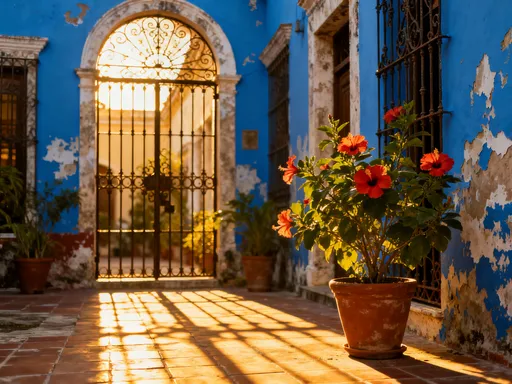
Walk through the entrance of a small boutique lodge near the Ngorongoro Conservation Area, and you may find yourself greeted by walls painted in bold red ochre stripes, a color sacred to the Maasai, symbolizing protection, bravery, and unity. Doorways are framed with intricate beadwork, each pattern carrying meaning—some represent rainfall, others the path of migration, and some tell stories of ancestral journeys. The layout of the compound often mirrors the circular form of the *inkajijik*, with guest rooms arranged around a central courtyard. This design fosters a sense of togetherness, encouraging conversation and shared experience, much like traditional Maasai life.
What elevates these designs is the direct involvement of local artisans. In many cases, Maasai painters, weavers, and carvers are employed not as laborers but as collaborators. A woman from a nearby village may spend days hand-painting geometric motifs on a guesthouse wall, using natural pigments passed down through generations. A blacksmith might forge iron fixtures shaped like cattle horns, a nod to the cultural importance of livestock. These details are not decorative afterthoughts; they are expressions of identity. For visitors, staying in such a space becomes more than a lodging choice—it becomes a cultural encounter, a chance to sleep within a living tradition. The architecture, in this way, becomes a bridge between worlds, offering dignity to local knowledge and deepening the traveler’s understanding of place.
Nature as Blueprint: Biomimicry in Eco-Lodges
In the Serengeti, some of the most innovative architecture takes its cues not from human history but from the natural world itself. This approach, known as biomimicry, involves studying biological systems and applying their principles to design. One of the most striking examples is the use of termite mound-inspired ventilation. Termites build towering nests that maintain a constant internal temperature despite extreme external heat. By creating vertical chimneys within lodge walls, architects replicate this passive cooling system. Hot air rises and escapes through the top, while cooler air is drawn in from below, eliminating the need for air conditioning. The result is a space that stays comfortable all day, powered entirely by natural airflow.
Another example can be seen in the thatched roofs of many eco-lodges. Crafted from local grasses and woven in dense layers, these roofs resemble the nests of weaver birds—durable, insulated, and perfectly adapted to the climate. They keep interiors cool in the day and warm at night, while blending seamlessly with the golden hues of the savanna. These roofs are not only functional but beautiful, their organic textures adding depth and warmth to the structures they crown. Materials are carefully chosen for their sustainability: stone quarried nearby, bamboo grown in local forests, and reclaimed wood repurposed from fallen trees. Even the cement used in some foundations is mixed with natural pigments to match the soil, reducing visual contrast with the landscape.
One well-known eco-lodge in the western Serengeti exemplifies this philosophy. Its main common area rises like a cluster of seed pods, each dome housing a different function—dining, lounge, library. The domes are constructed from compressed earth blocks, a technique that uses minimal energy and provides excellent thermal mass. Solar panels are integrated into the design, hidden beneath wooden louvers that resemble traditional grain silos. Rainwater is collected in underground cisterns, and composting toilets are built into the slope of the land, minimizing water use and environmental impact. Every element serves a dual purpose: it is both beautiful and efficient. For guests, the experience is one of quiet luxury—not defined by opulence, but by thoughtful design that respects the ecosystem.
Open-Air Galleries: When Architecture Becomes an Exhibition
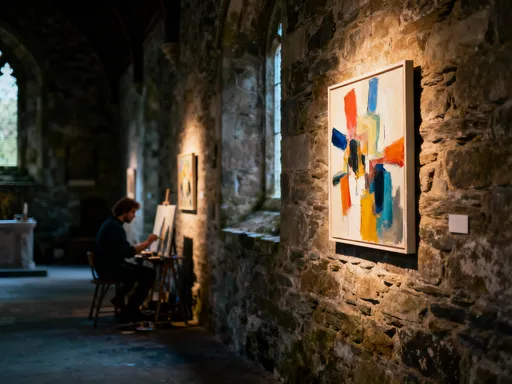
In the Serengeti, some buildings transcend function and become art installations in their own right. These are not museums with walls and curators, but open-air galleries where every angle is composed, every material chosen for its texture and tone. Consider a dining pavilion perched on a rocky outcrop. Its roof is supported by hand-carved wooden columns, each one unique, their grain exposed like brushstrokes. The space is open to the east, framing the sunrise as if it were a rotating masterpiece. As the light shifts, so does the atmosphere—morning brings soft gold, midday casts sharp shadows, and evening wraps the space in warm copper tones. The architecture does not stand still; it changes with time, inviting guests to witness its transformation.
Pathways in these spaces are designed with the same care as museum exhibits. They do not simply connect points A and B; they guide movement and focus attention. A narrow corridor of woven reed screens might filter the view, revealing a waterhole only in fragments until the final turn. A stone walkway could be laid in a spiral, echoing the pattern of a snail’s shell, slowing the pace and encouraging mindfulness. Courtyards are often built around ancient trees, their canopies becoming living roofs. Benches are placed to offer specific vantage points—toward a distant herd, a flock of birds, or the slow drift of clouds. These spaces are choreographed, not just constructed.
Sensory details elevate the experience. Wind moves through perforated metal screens shaped like animal tracks, creating soft chimes. Firelight at night dances across textured mud walls, casting moving patterns that mimic the flicker of grass in the breeze. The scent of burning wood, the sound of crickets, the coolness of stone underfoot—all are part of the design. This is architecture that engages more than the eye; it speaks to memory, emotion, and presence. For the traveler, it offers moments of stillness, a rare gift in a world of constant motion. These spaces do not demand attention; they earn it, slowly, through layers of detail and intention.
Crafted by Community: Local Hands Shaping Unique Spaces
Behind every remarkable structure in the Serengeti is a team of local artisans whose skills have been honed over generations. These are not anonymous laborers but master craftsmen—masons who know how to mix mud with just the right amount of dung for durability, weavers who can create roof panels that last decades, and carpenters who carve doors with symbols of protection and prosperity. Their knowledge is not taught in schools but passed down through families, often from father to son or mother to daughter. When these artisans are invited into the design process, the result is architecture that carries the weight of history and the warmth of human touch.
In a small village near Seronera, a workshop buzzes with activity. Men and women gather under a shade tree, weaving sisal fibers into wall panels that will line the walls of a new guest suite. The pattern they use is one that has been repeated for generations, believed to ward off evil spirits and bring good fortune. Nearby, a carpenter uses hand tools to carve a doorframe with images of giraffes and acacia trees—symbols of resilience and connection to the land. These pieces will not be mass-produced; each is unique, bearing the marks of the maker’s hand. When guests later run their fingers over the grooves in the wood or notice the slight variation in the weave, they are touching something real—something alive with story.
Tourism, when done responsibly, becomes a vehicle for preserving these traditions. Lodges that prioritize local craftsmanship provide steady income, allowing artisans to continue their work without migrating to cities in search of jobs. Some properties even host cultural evenings where guests can meet the makers, hear their stories, and see demonstrations of techniques like beadwork or mud painting. This transparency deepens appreciation and fosters respect. It also ensures that the benefits of tourism are shared more equitably. For the traveler, staying in a space built by local hands is not just an aesthetic choice—it is an ethical one, a way of supporting communities while experiencing authenticity at its most profound.
Design That Gives Back: Sustainability Meets Aesthetic Vision
True beauty in the Serengeti is inseparable from responsibility. The most admired architectural projects are those that give back to the land rather than take from it. This philosophy is embedded in every stage of design and operation. Rainwater harvesting systems are not hidden but celebrated—channels carved into stone walls direct water into underground tanks, their paths designed to resemble the flow of a river. Solar panels are mounted on wooden frames that double as shade structures or art installations, their geometric patterns echoing traditional Maasai shields. Composting toilets are built into the natural slope of the land, reducing water use and returning nutrients to the soil without disturbing the view.
Reputable lodges follow strict environmental guidelines to minimize their footprint. They avoid single-use plastics, source food from local farms, and limit vehicle traffic to protect wildlife corridors. Buildings are sited to avoid disrupting animal migration routes, and lighting is designed to be low-impact, using warm tones that do not disturb nocturnal species. Even waste is managed with care—organic material becomes compost for gardens, and recyclables are transported to nearby processing centers. These practices are not just about compliance; they are part of a deeper commitment to stewardship.
What sets these projects apart is that sustainability never comes at the cost of beauty. On the contrary, it enhances it. A water cistern might be encased in a mosaic of recycled glass, glinting in the sun like a hidden jewel. A solar array could be arranged in a pattern that mimics the stars of the Southern Cross, turning utility into art. Guests are not asked to sacrifice comfort for ethics; they are offered a richer experience—one where luxury is redefined as harmony, not excess. This is design with conscience, where every decision reflects a respect for both people and planet. For the traveler, it offers peace of mind: the knowledge that their stay contributes to preservation, not degradation.
How to Experience It: Choosing the Right Stay for the Art-Lover Traveler
For those seeking this unique blend of art, culture, and nature, the key is intentionality. Not all lodges in the Serengeti embrace this philosophy, so choosing the right one requires research and discernment. Look for properties that emphasize locally inspired design, collaborate with artisans, and openly share their sustainability practices. Smaller, independent lodges often lead the way in innovation, unburdened by the constraints of large hotel chains. Read guest reviews that mention craftsmanship, cultural authenticity, and environmental care. Visit lodge websites and look for photos that show details—hand-painted walls, woven roofs, or courtyards built around trees.
When booking, ask specific questions. Inquire about the origin of building materials, the involvement of local communities, and how energy and water are managed. A transparent operator will welcome these questions and provide clear answers. Consider the scale of the property—smaller lodges with fewer than ten rooms often offer a more intimate and personalized experience. They are more likely to integrate seamlessly into the landscape and foster meaningful connections with staff and artisans.
Timing your visit can also enhance the experience. The shoulder seasons—late spring and early autumn—offer softer light, fewer crowds, and active wildlife. Early morning and late afternoon provide the best lighting for appreciating architectural details, when shadows are long and textures are most pronounced. If possible, plan your stay around cultural events, such as a Maasai blessing ceremony or a local craft fair, where the setting becomes part of a living tradition. These moments transform a simple stay into a profound encounter, where architecture, art, and culture converge in unforgettable ways.
The Serengeti’s true masterpiece isn’t just in its wildlife—it’s in the quiet brilliance of structures that listen to the land and honor tradition. These architectural wonders don’t shout; they whisper, inviting deeper connection. For the traveler seeking meaning beyond the safari checklist, this is where art lives—unframed, unhurried, and unforgettable.