You Won’t Believe These Photo Spots in Te Anau’s Hidden Corners
Nestled on the edge of Fiordland National Park, Te Anau is more than just a gateway to Milford Sound—it’s a photographer’s dream hiding in plain sight. I didn’t expect much beyond the lakeside views, but every district of this quiet town holds a visual surprise. From golden-hour reflections on the water to misty trails lined with native bush, Te Anau’s charm lies in its subtle beauty. These aren’t just scenic stops—they’re moments waiting to be captured. With its untouched landscapes, rich biodiversity, and serene atmosphere, the town offers an intimate connection with nature that translates powerfully through the lens. Whether you’re an experienced photographer or simply someone who appreciates beauty in stillness, Te Anau invites you to look closer, linger longer, and discover the quiet magic that unfolds when light meets land.
The Lakeside Promenade: Where Light Meets Water
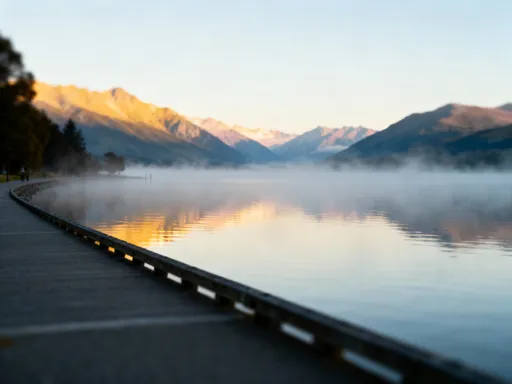
Stretching along the western shore of Lake Te Anau, the lakeside promenade is both accessible and endlessly photogenic. This well-maintained walkway serves as the town’s visual spine, offering unobstructed views across the glassy surface toward the distant Darran Mountains. The real magic happens in the early morning hours, when a soft blanket of fog rises from the lake, diffusing the first light of day into a palette of pale golds and cool blues. During these quiet moments, the water acts like a mirror, perfectly reflecting the sky and surrounding peaks. Photographers often set up tripods along the wooden boardwalks to capture long-exposure shots that blur the boundary between reality and reflection.
Golden hour—just after sunrise and before sunset—is the most rewarding time to shoot here. The low angle of the sun casts warm, directional light that enhances textures in the rocks, ripples, and shoreline vegetation. Using a polarizing filter can help reduce glare and deepen the contrast between sky and water, especially on clear days. Wide-angle lenses are ideal for capturing the sweeping panoramas, while telephoto lenses allow for isolating distant mountain ridges or focusing on the delicate patterns formed by wind on the lake’s surface.
Seasonal shifts dramatically alter the character of the promenade. In autumn, the mix of native beech trees and introduced deciduous species along the path turns the lakeside into a tapestry of amber, crimson, and ochre. These colors are particularly vivid when mirrored in still waters. Winter brings a different kind of beauty—frost-covered benches, icy patches along the shore, and snow-dusted mountain ranges that appear sharper and more defined against a pale sky. Even on overcast days, the soft, even lighting minimizes harsh shadows, making it easier to achieve balanced exposures without post-processing extremes.
What makes this urban stretch feel extraordinary is its seamless integration with wilderness. There are no tall buildings or busy roads to distract the eye. Instead, the promenade blends naturally into the environment, with native flaxes and grasses framing the walkway. Families, joggers, and cyclists pass quietly, adding gentle human elements to compositions without overwhelming the natural serenity. For those seeking authenticity in their travel photography, the promenade offers a rare balance: convenience and accessibility paired with raw, unspoiled beauty.
Te Anau Bird Sanctuary: Capturing Native Wildlife in Focus
A short walk from the town center, the Te Anau Bird Sanctuary stands as a quiet triumph of conservation and a haven for photographers interested in native wildlife. Enclosed by a predator-proof fence, this protected area provides a safe environment for some of New Zealand’s most vulnerable bird species. Among them are the tūī, with its iridescent feathers and distinctive white throat tufts, and the kākā, a curious forest parrot known for its loud calls and bold personality. These birds, once rarely seen in the wild due to invasive predators, now thrive here in semi-natural conditions, offering unparalleled opportunities for close-up photography.
The sanctuary’s design enhances photographic potential. Native trees and shrubs have been carefully planted to mimic the natural forest understory, creating layers of depth and texture in every frame. Sunlight filters through the canopy in dappled patterns, producing soft highlights and gentle shadows that flatter feather details and eye expressions. Mid-morning and late afternoon are optimal times to shoot, when birds are most active and the light is warm but not overly harsh. A telephoto lens with a focal length of at least 300mm allows photographers to maintain a respectful distance while still capturing sharp, intimate portraits.
Patience is essential. Birds move unpredictably, and the best shots often come after waiting quietly near feeding stations or flowering flax plants where tūī come to drink nectar. Using continuous autofocus and a fast shutter speed—ideally 1/1000th of a second or higher—helps freeze motion, especially when capturing flight or rapid head turns. Shooting in burst mode increases the chances of getting that perfect moment: a kākā tilting its head, a tūī mid-song with wings slightly raised, or a young bird taking its first steps on a low branch.
Equally important is ethical awareness. The sanctuary is not a zoo but a conservation project with real ecological stakes. Visitors are asked to remain on designated paths, keep noise to a minimum, and avoid sudden movements. These rules protect the birds’ stress levels and natural behaviors, ensuring they remain comfortable in their environment. For photographers, this means embracing stillness as part of the creative process. The resulting images are not only technically strong but emotionally resonant—genuine glimpses into the lives of creatures that represent New Zealand’s unique evolutionary path.
The Town Centre: Charming Details in Plain Sight
While many travelers rush toward the lake or hiking trails, the heart of Te Anau’s compact downtown holds a quieter kind of beauty—one best appreciated through the lens of a street photographer. The town center, clustered around Evenki Street and the waterfront plaza, blends alpine charm with practical Kiwi design. Wooden façades, slate roofs, and hand-painted signs evoke a sense of timelessness, while the absence of chain stores and billboards preserves an authentic, lived-in feel. This is not a tourist replica but a real community, and its everyday moments carry visual poetry.
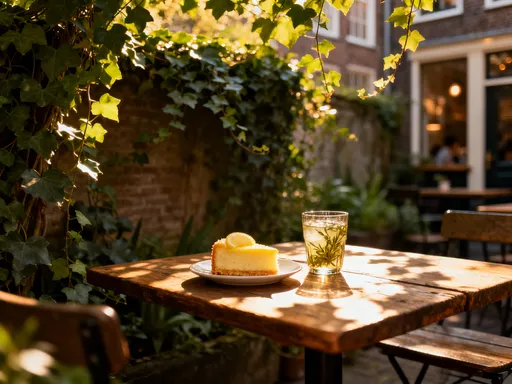
Overcast days, often dismissed by casual photographers, are in fact ideal for capturing the town’s textures and colors. The soft, diffused light eliminates harsh contrasts, allowing for rich saturation in red doorways, green shutters, and hand-carved signage. Rain adds another dimension: puddles become reflective surfaces, shop windows glisten, and woolen scarves or gloves left on benches tell silent stories of passersby. A macro lens can reveal the intricate grain of weathered wood, droplets clinging to spiderwebs, or the steam rising from a freshly poured flat white at a corner café.
Look beyond the obvious. A child’s drawing taped to a bakery window, a bicycle leaning against a lamppost, or the way afternoon light slants across a library step—all of these are visual narratives waiting to be framed. These details don’t shout for attention; they whisper. But when composed with care, they convey warmth, resilience, and a deep connection to place. Smartphone photographers can excel here, using portrait mode to isolate subjects and enhance depth, or time-lapse features to document the slow rhythm of small-town life.
One of the most powerful aspects of photographing the town center is its accessibility. No special permits, gear, or physical endurance are required. A 10-minute stroll can yield a dozen compelling shots. Yet, the emotional payoff is significant. These images often become the most cherished in a travel album—not because they depict grand vistas, but because they capture the soul of a place. For family-oriented travelers, especially women who value connection and memory-making, these intimate photographs resonate deeply, serving as tangible reminders of time well spent.
Eastern Bay Road: Secret Shoreline Perspectives
Just a few kilometers east of Te Anau’s center, Eastern Bay Road winds along the lake’s edge, revealing secluded bays and untouched shoreline rarely seen by casual visitors. This quiet stretch of road offers some of the most private and atmospheric photo opportunities in the region. Unlike the main promenade, which can draw crowds during peak season, these pull-offs are often empty, allowing photographers to work without distraction. The sense of solitude enhances the experience, making it easier to tune into the subtle movements of nature—the lap of waves, the call of a distant pied shag, the rustle of leaves in a light breeze.
The landscape here is shaped by gentle curves of the lake, framed by native vegetation such as mānuka, flax, and rimu. These plants don’t just add greenery—they serve as natural foreground elements that add depth and framing to compositions. Low-angle shots taken at water level, using a small tripod or even a rock for support, can create dramatic perspectives where reeds lead the eye toward the horizon. During late afternoon, the setting sun casts long shadows and warm highlights across the bay, turning the water into a canvas of gold and copper.
Long-exposure photography thrives in this environment. With a neutral density (ND) filter, photographers can extend shutter speeds to 10 or 30 seconds, smoothing the surface of the water into a glassy finish while keeping the shoreline sharp. This technique transforms choppy waves into serene expanses, emphasizing stillness and timelessness. The effect is especially striking when paired with a single moored boat, a drifting log, or a flock of ducks gliding silently across the frame.
Access to some of these spots can be affected by weather. After heavy rain, sections of the road may become muddy or temporarily impassable, particularly near wetland areas. It’s advisable to check local conditions and drive slowly to avoid damaging the fragile edges. However, these minor challenges are outweighed by the rewards. The Eastern Bay area offers a rare combination: proximity to town and a sense of true wilderness. For photographers seeking authenticity over convenience, this road is a hidden treasure.
Northern Outlooks: Elevated Vistas with Minimal Effort
For those who want expansive views without committing to a multi-hour hike, the northern outskirts of Te Anau deliver. Gentle inclines leading away from the marina and campground open up to elevated vantage points that showcase the full breadth of Lake Te Anau and the distant mountain ranges. These spots are accessible via short, well-marked walking trails—some under 15 minutes long—making them ideal for families, older travelers, or anyone with limited time. Yet, the photographic payoff is substantial.
From these heights, the landscape unfolds in layers: the deep blue of the lake, the patchwork of grasslands and forests, and the jagged peaks of the Darran Mountains rising in the distance. Wide-angle lenses capture the full sweep of this panorama, while telephoto lenses can isolate specific features, such as a lone tree on a ridge or a plume of mist escaping a valley. The contrast between manicured park areas and wild, untamed nature adds visual interest, emphasizing the town’s role as a gateway between civilization and wilderness.
Midday light, often avoided in photography, can work to advantage here. The high sun enhances the clarity of distant peaks and brings out the texture of the water’s surface. Polarizing filters help manage glare and deepen the blue tones of both sky and lake. Early morning visits offer the added benefit of mist hovering above the water, creating a dreamlike atmosphere that softens edges and adds mystery to compositions.
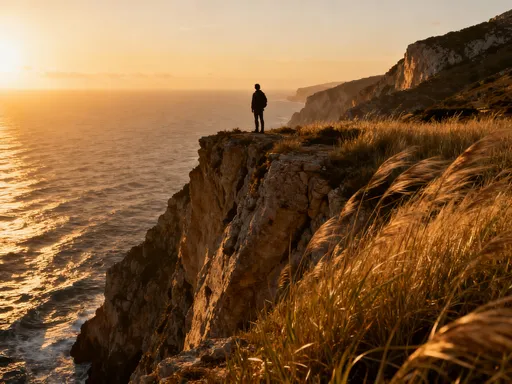
One of the most photographed outlooks in this area faces west, providing a front-row seat to sunset. As the sun dips below the horizon, the sky ignites in shades of rose, tangerine, and violet, reflected in the still water below. Photographers often arrive 30 minutes early to secure a spot and set up their equipment. The lack of artificial lighting ensures that colors remain pure and unfiltered. These elevated perspectives not only yield stunning images but also provide a sense of orientation—helping visitors understand their place within the vastness of Fiordland.
Twilight in Te Anau: Mastering Night and Low-Light Scenes
When darkness falls, Te Anau transforms into a stage for celestial photography. With minimal light pollution and clear southern skies, the town offers exceptional conditions for capturing the night. The Milky Way, visible during certain months of the year, arcs dramatically above the lake, its dense core glowing like a river of stars. For photographers, this is not just a spectacle—it’s an accessible opportunity to create images of profound depth and emotion.
Shooting the night sky requires basic but deliberate technique. A DSLR or mirrorless camera on a sturdy tripod, set to manual mode, is essential. Use a wide-angle lens with a low f-number (f/2.8 or lower) to gather maximum light. Set the ISO between 1600 and 3200, and the shutter speed to 15–25 seconds to avoid star trails caused by Earth’s rotation. The 500 Rule—dividing 500 by the focal length—helps determine the longest usable exposure before stars begin to blur. Focus must be set to infinity, often achieved by manually focusing on a bright star or distant light using live view zoom.
But you don’t need professional gear to succeed. Modern smartphones with night mode can produce surprisingly detailed images of the starry sky, especially when stabilized on a tripod or steady surface. The key is patience and darkness. Choose locations away from streetlights—such as the northern lookout or a quiet stretch of Eastern Bay Road—where the sky is fully visible. Allow your eyes to adjust, and let the camera do the work over multiple exposures.
There’s a meditative quality to night photography in Te Anau. The cold air, the silence, the slow rhythm of shutter clicks—all contribute to a sense of connection with the universe. Images taken here often become keepsakes, not just for their beauty but for the memory of standing alone beneath a sky so full of stars it feels infinite. For mothers and caregivers who rarely have time to pause, this experience offers a rare moment of awe and reflection.
Why These Districts Tell a Deeper Story
Te Anau’s photographic richness does not come from a single landmark or dramatic landmark, but from the quiet accumulation of moments across its districts. Each area—the lakeside, the sanctuary, the town center, the eastern bays, the northern heights, and the night skies—contributes a different chapter to the town’s visual narrative. Together, they form a portrait not of spectacle, but of harmony: between people and nature, stillness and movement, light and shadow.
What makes these spots truly special is their authenticity. There are no staged photo ops, no crowded viewing platforms, no artificial enhancements. What you see is what exists—a lakeside bench warmed by morning sun, a tūī sipping nectar in a flax bush, a child’s drawing taped to a shop window. These images resonate because they are real. They reflect a place that values preservation over profit, quiet over noise, depth over dazzle.
For the 30- to 55-year-old woman traveling with family or friends, Te Anau offers more than scenic backdrops—it offers space to breathe, to notice, to remember why travel matters. Photography becomes a way to slow down, to engage the senses, to preserve not just what was seen, but how it felt. The best images from this town are not the ones with the most dramatic lighting or the rarest bird, but the ones that capture a moment of connection—between observer and observed, between self and place.
In a world increasingly dominated by fast content and fleeting impressions, Te Anau invites a different pace. It asks photographers to look beyond the postcard and find beauty in the overlooked—the steam from a coffee cup, the pattern of rain on glass, the silent flight of a bird at dusk. These are the details that, when framed with care, tell a deeper story: of resilience, of peace, of a place that guards its wild heart with quiet pride. So bring your camera, but more importantly, bring your attention. The magic of Te Anau isn’t just in its views—it’s in the way it teaches you to see.