You Won’t Believe These Hidden Giants on Easter Island
Easter Island is more than just moai statues staring into the void—there’s a deeper, quieter magic in its forgotten corners. I wandered beyond the postcard spots and found ancient stone homes, sacred shrines, and ruins humming with history. These hidden landmark buildings reveal how real people once lived, worshipped, and thrived. If you’re chasing authenticity over crowds, this island has secrets waiting—silent, powerful, and absolutely unforgettable.
Beyond the Moai: Discovering Easter Island’s True Architectural Soul
Easter Island, or Rapa Nui as it is known to its indigenous people, is often reduced to a single image: the towering moai statues gazing across the Pacific. Yet this perception overlooks a far richer architectural legacy. Beyond the well-trodden paths of Rano Raraku and Ahu Tongariki lie scattered remnants of daily life—stone foundations, ceremonial platforms, and family compounds that speak to a deeply organized and spiritually grounded society. These structures were not built merely for spectacle but to sustain community, honor ancestors, and align with natural rhythms. Understanding them transforms a visit from sightseeing to storytelling.
The island’s built environment reflects centuries of adaptation to a remote and limited ecosystem. Without trees for timber or abundant fresh water, the Rapa Nui people mastered stone construction with remarkable precision. Their homes, temples, and gathering spaces were engineered for durability and harmony with the land. Unlike the moai, which were created over a specific period and eventually abandoned, these everyday structures evolved over generations. They represent continuity, resilience, and a way of life shaped by isolation and ingenuity. When travelers recognize this, they begin to see Easter Island not as a monument to collapse, but as a testament to cultural endurance.
Oral histories passed down through Rapa Nui families emphasize that identity was rooted in place and lineage. Each ahu (ceremonial platform) served as a spiritual and social anchor for a clan, connecting the living with their ancestors. The placement of homes near these platforms was intentional, reinforcing the belief that family and faith were inseparable. To walk among these ruins today is to trace the footprints of a people who lived with purpose. Their architecture was not separate from nature or ritual—it was an extension of both. Recognizing this depth invites a more respectful and reflective form of tourism, one that values context over convenience.
Orongo’s Ceremonial Edge: Where Religion Met Landscape
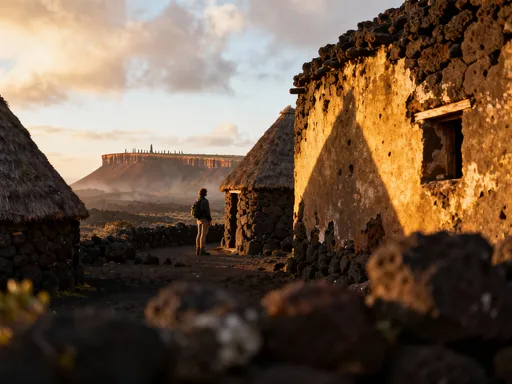
Perched dramatically on the rim of Rano Kau, an extinct volcano, Orongo is one of Easter Island’s most spiritually charged locations. This ancient ceremonial village consists of more than 50 elliptical stone houses with low doorways and thick walls, built to withstand the island’s fierce winds. It was here, between the 17th and 19th centuries, that the birdman cult (tangata manu) replaced the moai-building tradition as the central religious practice. Pilgrims would descend the cliffs to collect the first sooty tern egg of the season from nearby Motu Nui islet, a dangerous journey that crowned a new spiritual leader each year.
The site’s atmosphere is otherworldly. Jagged black lava fields stretch toward the sea, and the wind carries whispers of chants long silenced. Petroglyphs carved into stone—images of birdmen, makemake (the creator deity), and stylized faces—still mark the walls, their meanings preserved through oral tradition. These carvings are not mere decorations; they are sacred records, mapping cosmology onto rock. Standing among them, visitors feel the weight of ritual and the thin boundary between human effort and divine favor. Orongo was not just a place of competition but of transformation—a threshold where men became vessels of the sacred.
Timing a visit to Orongo with the spring equinox enhances the experience in subtle but powerful ways. As the sun rises over the crater, light spills across the stone dwellings in a sequence that aligns with key petroglyphs, suggesting the builders incorporated solar events into their ceremonial calendar. This interplay of light and stone reveals an advanced understanding of astronomy and landscape design. While modern tourists may not participate in the birdman ritual, walking the same path at dawn offers a rare moment of connection—between past and present, earth and sky. Guides from local families often share stories at this time, reminding visitors that Orongo is not a ruin but a living memory.
Tahai’s Sunset Complex: A Revived Cultural Heart
Near the island’s main town of Hanga Roa, the Tahai complex has undergone a meticulous restoration that honors both historical accuracy and cultural dignity. Once overgrown and fragmented, this site now stands as a model of community-led heritage preservation. It includes three main structures: Ahu Ko Te Riku, a restored platform featuring a moai with coral eyes and a red topknot (pukao); Ahu Vai Uri, a burial site for local chiefs; and the remains of a thatched Hale o te Rongo temple dedicated to peace and fertility. Together, they offer a comprehensive view of Rapa Nui’s spiritual and social architecture.
What makes Tahai especially meaningful is its alignment with celestial events. During the winter solstice, the setting sun aligns perfectly with Ahu Ko Te Riku, illuminating the moai’s face in a golden glow. This intentional orientation reflects the Rapa Nui people’s deep knowledge of astronomy and their integration of cosmology into daily life. Unlike many reconstructed sites that feel artificial, Tahai retains authenticity because the work was guided by local archaeologists and elders who ensured traditional methods were respected. Stones were repositioned using oral histories and archaeological evidence, not guesswork.
Tahai also serves as an educational hub. Evening tours led by Rapa Nui guides include storytelling, traditional music, and explanations of ritual practices. Families gather here at sunset, not only for its beauty but to reaffirm their connection to ancestors. For travelers, this accessibility does not diminish reverence—it deepens it. The site demonstrates how preservation can be both accurate and alive, allowing culture to breathe rather than remain frozen in time. By supporting such initiatives, visitors contribute to a form of tourism that uplifts rather than exploits, learning not just about history but from it.
Stone Villages of Anakena: Living Like the Ancients
Anakena Beach, with its white sand and swaying palms, is often celebrated for its beauty—but beneath the surface lies a story of ancient domestic life. Scattered behind the dunes are the remains of hare paenga, boat-shaped stone houses that once sheltered Rapa Nui families. These structures, with their curved foundations made of basalt blocks, were designed to mimic the upturned hulls of canoes—a nod to the islanders’ seafaring origins. The thick stone walls provided insulation against heat and wind, while thatched roofs made from sugarcane leaves offered protection from rain.
Archaeological evidence suggests these homes were arranged in clusters, reflecting extended family units. Central fire pits, stone ovens (umu), and storage nooks indicate a highly organized domestic routine. Meals were prepared communally, and stories were shared under the stars. Unlike the grand ceremonial sites, Anakena offers an intimate glimpse into the rhythms of ordinary life—children playing, elders teaching, meals cooked over open flames. Walking among the low walls today, one can almost hear the echoes of laughter and the crackle of fires long extinguished.
For visitors seeking solitude, early morning is the ideal time to explore Anakena. The beach is quieter, the light softer, and the connection to the past more immediate. Local guides often begin their tours here, using the site to explain how architecture reflected social values—simplicity, efficiency, and harmony with nature. There are no entrance fees or fences, but a quiet respect is expected. Visitors are reminded that these are not just ruins but ancestral homes. By listening to stories shared by guides, travelers gain insight that no brochure can provide, transforming a scenic stop into a moment of meaningful reflection.
Ahu Akivi and the Seven Watchers: Astronomy in Stone
Most moai face inland, watching over their communities, but Ahu Akivi breaks this pattern. Its seven statues stand shoulder to shoulder, gazing directly toward the ocean—an anomaly that has intrigued archaeologists for decades. Located inland from the coast, this site is believed to have served as an astronomical observatory. The moai are aligned so that during the equinox, the sun rises directly behind them, creating a dramatic silhouette against the horizon. This precise orientation suggests the builders used the statues not only for spiritual purposes but as markers for seasonal change.
The site’s name, Akivi, is linked to a legend of seven explorers sent by King Hotu Matu’a to find the island. Their eternal vigil symbolizes guidance and discovery, making this one of the few ahu associated with specific historical figures rather than ancestral worship. The platform itself is built on a natural ridge, enhancing visibility across the landscape. Stone markers around the site may have been used to track lunar cycles and solstices, aiding in agricultural planning and navigation. This blend of myth and science reveals a culture that saw no separation between the spiritual and the practical.
What sets Ahu Akivi apart is its tranquility. Removed from the main tourist circuits, it offers space for quiet contemplation. There are no vendors, no crowds, only the wind and the steady gaze of the seven watchers. Visitors often sit in silence, absorbing the stillness and the sense of time stretching backward. It is a place that invites questions: How did they know? Why here? What were they trying to tell us? While answers may never be complete, the experience fosters a deep appreciation for the intellectual achievements of the Rapa Nui people—a legacy written not in books but in stone and sky.
Hidden Ahus in the Countryside: Finding Solitude Among Sacred Stones
While the major ahus attract most visitors, dozens of smaller, lesser-known platforms lie scattered across Easter Island’s interior. Hidden in pastures, tucked into hillsides, or half-buried in grass, these sites remain largely untouched by tourism. Many are on private land, maintained by local families who treat them as sacred spaces. Unlike the restored and signposted monuments, these ahus retain a raw, weathered beauty—the stones softened by time, the outlines blurred by moss and wind. Their quiet presence speaks of endurance, of memory held in stone rather than spectacle.
Exploring these remote sites requires respect and sensitivity. There are no official trails or visitor centers, and GPS coordinates are not publicly shared to prevent damage. The best way to discover them is through guided tours led by Rapa Nui community members. These guides not only ensure safe and ethical access but also share stories that bring the sites to life. A simple stone platform may be the resting place of a revered elder; a cluster of rocks could mark a ceremonial boundary. Without context, they might seem insignificant. With guidance, they become portals to the past.
The value of visiting these hidden ahus lies not in photography but in presence. Standing among them, one feels the weight of silence, the absence of noise and distraction. There are no crowds, no announcements, only the rustle of grass and the distant call of seabirds. This solitude allows for deeper reflection, a chance to move beyond observation into understanding. It reminds travelers that some places are not meant to be conquered or captured—but honored. By choosing to visit with humility and care, tourists become stewards of memory rather than mere spectators.
Preserving the Past: How Travelers Can Respect Rapa Nui’s Legacy
As Easter Island welcomes more visitors each year, the pressure on its fragile archaeological sites grows. Foot traffic, unauthorized climbing, and lack of awareness threaten the very structures travelers come to see. Preservation is no longer optional—it is urgent. The Rapa Nui people have long advocated for responsible tourism, emphasizing that these sites are not attractions but sacred spaces tied to identity and ancestry. Every stone, every carving, every platform carries meaning that transcends aesthetics.
Travelers can make a meaningful difference by supporting community-led initiatives. Choosing guided tours operated by local families ensures that knowledge is shared accurately and that economic benefits stay within the community. Staying on marked paths, avoiding physical contact with structures, and refraining from removing even small stones are simple but vital practices. Equally important is listening—learning about protocols, understanding the significance of silence, and recognizing that some areas may be closed for cultural reasons. Respect is not just about rules; it is about attitude.
Education plays a crucial role. Many visitors arrive with misconceptions—believing the island was abandoned due to self-destruction or that the moai are the only relics of value. Modern scholarship, informed by Rapa Nui voices, paints a more nuanced picture: one of adaptation, resilience, and ongoing cultural vitality. By seeking out accurate information and engaging with local perspectives, travelers move beyond stereotypes. They begin to see Easter Island not as a cautionary tale but as a living culture with lessons to offer.
The hidden buildings of Easter Island—its stone homes, ceremonial villages, and quiet ahus—invite a different kind of journey. One that values depth over distance, understanding over ownership, and connection over conquest. These structures stand not as relics of a lost civilization, but as enduring voices of a people who continue to shape their story. To walk among them with care is to participate in that story. And in doing so, travelers do not just witness history—they help preserve it.